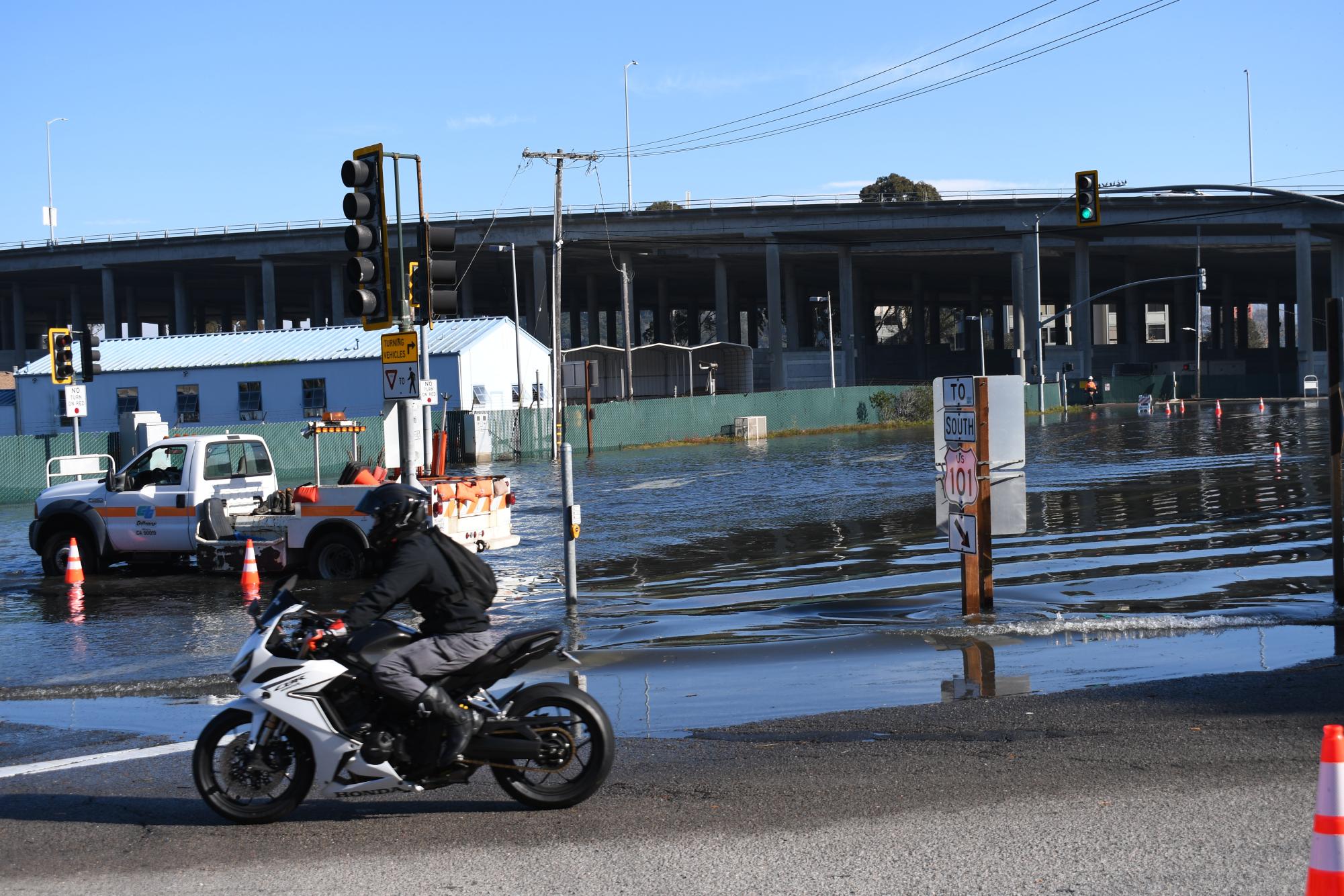
As the climate continues to change and the rainy season approaches, Mill Valley is particularly vulnerable to sea level rise and flooding.
In a world full of climate change and rising sea levels, flooding has become a bigger risk each year, with new data coming out every rainy season. According to climate.gov, high-tide flooding happens three to nine times more often than 50 years ago. Coastal regions in the U.S, such as the Bay Area town of Mill Valley in California, have a higher likelihood of being affected by rising sea levels. Mill Valley is built around a large marsh, which lies right in the middle of the community. With the connection to the Bay, the numerous creeks that run through Mill Valley, the town is especially vulnerable to flooding as sea levels continue to rise globally.
Mill Valley experiences flooding during king tides, and with the mix of tides and heavy rain, the Mill Valley roads flood, creating risks to the community. As sea levels continue to rise, Mill Valley and coastal communities face more severe flooding, and in the Bay Area, the consequences have become increasingly visible. According to firststreet.org, 36 percent of properties in Mill Valley have a risk of flooding in 30 years time. Properties like the Mill Valley Middle School are in high danger zones for flooding, with a huge risk of properties located near the marsh having the highest risk of flooding.
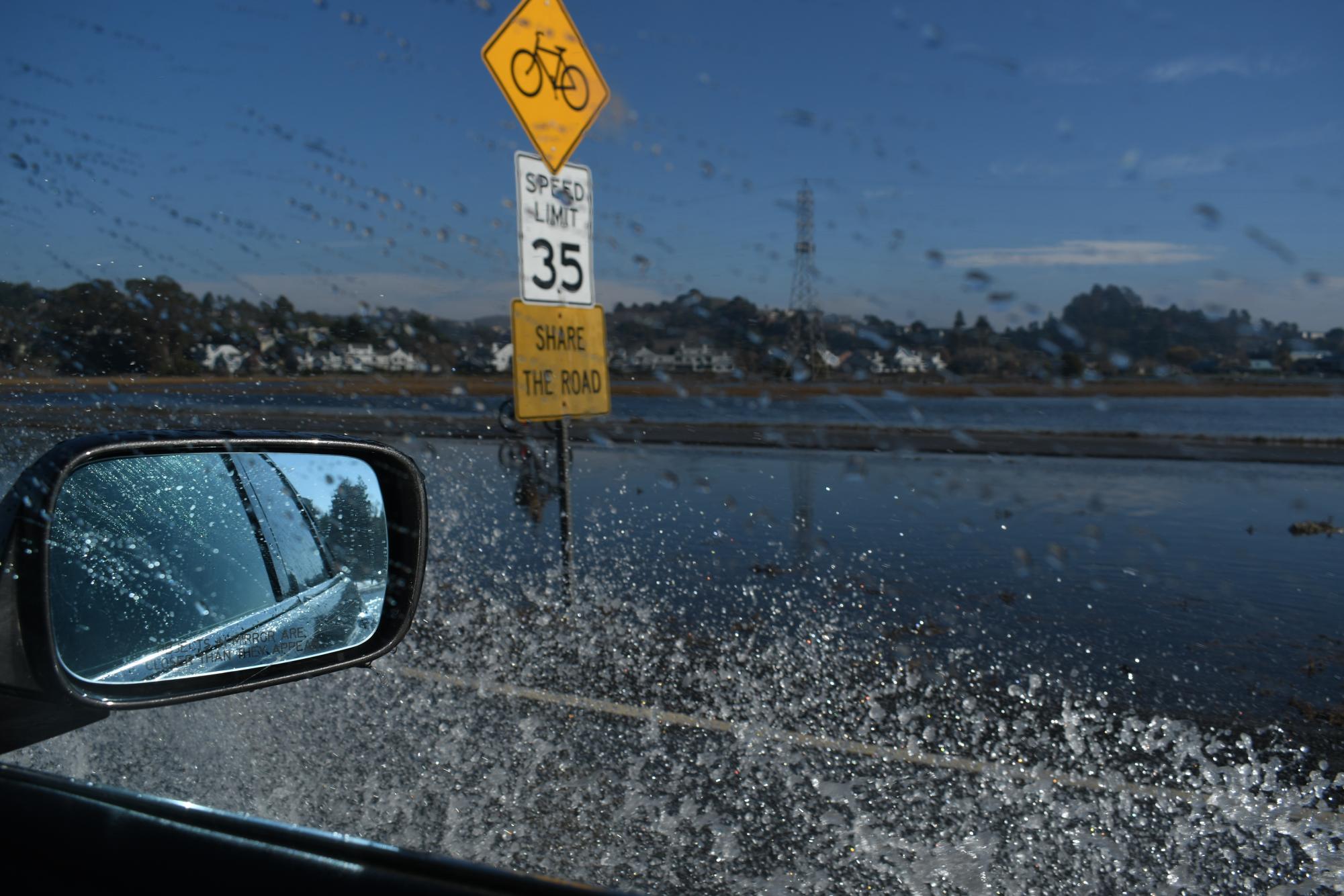
Tam senior Juliet Patti has to drive along the marsh every day to get to and from school. “A lot of times the roads are closed, and it takes an extra twenty minutes for me to go home.” Just like many other students and staff, the frustration of roads being flooded quite constantly is affecting Mill Valley’s community. Patti also stated that during the rainy season, it’s very difficult to drive, and she thinks it’s very dangerous in Mill Valley since it’s a town that isn’t built for huge flooding. Another Tam senior, Olivia Martin, adds, “Last time it flooded, I had to drive all the way over in the bike lane because the puddles were so deep. Cars had to drive slowly to avoid hydroplaning, and it’s overall just not a convenient way to drive home.” Students, staff, and people who drive through Mill Valley are affected and concerned for their safety.
The Tam Valley and Miller Avenue street, specifically when turning out of Tamalpais High School, is very susceptible to flooding and closures. In the past couple of weeks, cars needed to drive more slowly to avoid hydroplaning, and even drive into the bike lane because of how deep the water was. People are soon realizing this is not a practical way to drive.
With the impact and long-term effects this flooding can have on the town of Mill Valley, a local project dedicated to finding solutions is able to help Mill Valley in time for the future. This is where the Shoreline Adaptation Project comes in to help, thinking of solutions to combat the relevant issue of flooding in different areas of Mill Valley. As a community, this project helps people brainstorm solutions for how Marin can adapt to sea level rise. With plans to elevate and realign shoreline trails, it is helping protect the Mill Valley and Sausalito pathways from recent flooding. The project is also targeting habitat restoration, focusing on protecting the habitats situated along the marsh. Proposed infrastructure upgrades will also further support vulnerable areas most likely to be affected by sea level rise.
Tam High chemistry teacher Brocke Addison has been learning and teaching climate change for 15 years. He is most concerned that because some of the biggest cities are near coasts populated with humans, they are going to flood out completely and destroy all the cities, while also desalinating the ocean, making it catastrophic. Addison states, “We are looking at potentially 80 to 90 percent of oceanic species possibly dying. That’s really, really catastrophic.”
When asked about the Shoreline Adaptation Project, Addison did not know much about it, but was interested in learning more. “I’m glad that they are working on it. Like the wetlands, habitat is cool and makes our area unique. But also, it’s a really problematic area, right? I think working on trying to get climate change issues under control, but also still letting people see that the changing environment is a pain, and it’s going to get worse and worse, is something that people should actually know.” Addison shares a strong passion for the environment as a science teacher and is personally interested in these issues, but is also someone with a lot of concern for his community. He ends on a note of, “at the end of the day, the Shoreline Adaptation Project is one of those long-term infrastructure projects that will help the area on a long-term scale.”
More Tam students are being affected by the issue of flooding, and with the help of the Shoreline Adaptation Project, the city is working to redesign drainage systems on Miller Ave.
Addison added more of a perspective on how the seriousness of climate change in Marin and California differs from other places he has seen. “I will say, California as a whole does seem to take climate change a lot more seriously than other places in my life. I’ve lived throughout the South, and they don’t believe in it at all. So I will say that while there are still issues and stuff here, at least people acknowledge that this is an issue, and they are concerned about the environment.”
The growing awareness of rising sea levels, flooding, and climate change in Mill Valley reflects on how much of an urgent issue this is. Though, with the help of the Shoreline Adaptation Project shows the Bay Area is starting to take crucial steps on fixing this issue. Mill Valley is beginning to adopt a future where flooding and rising sea levels are a problem they need to start fixing as soon as possible, but they are beginning to successfully start with projects like the Shoreline Adaptation. The more support from people the project can get with volunteer days, meetings, and spreading awareness, helps adapt Mill Valley more to the changing climate.